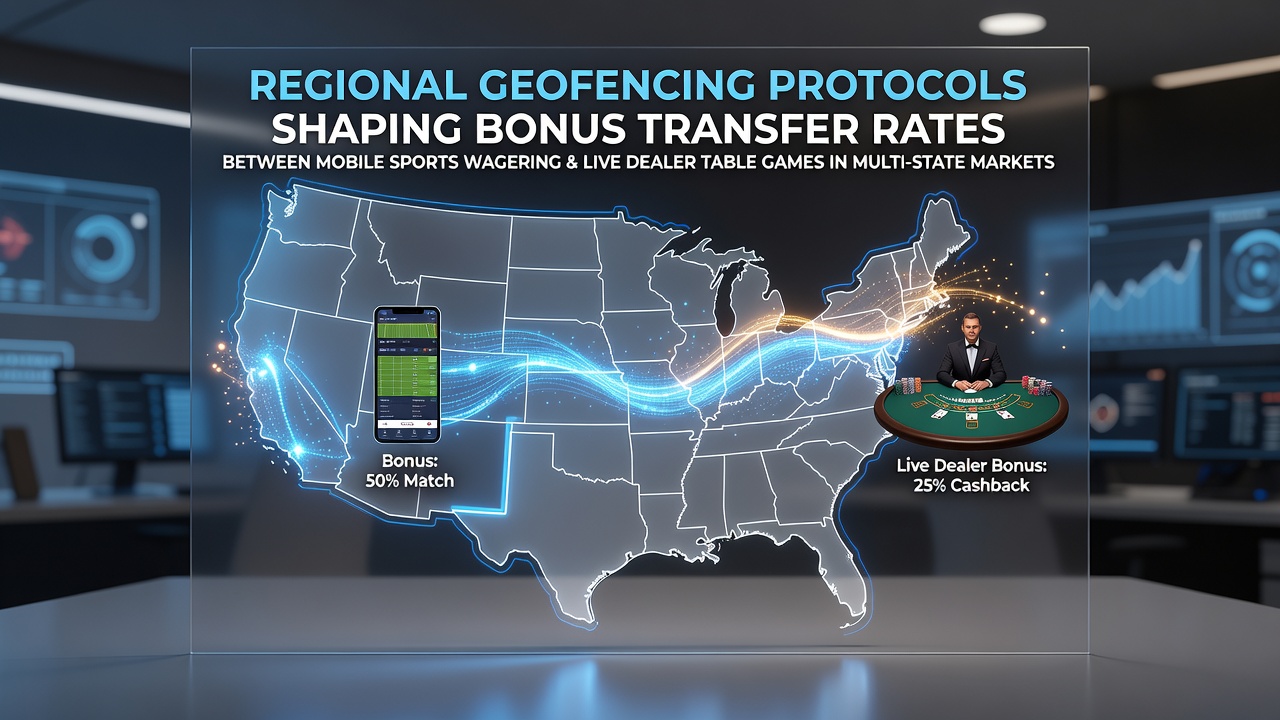
Regional Geofencing Protocols Shaping Bonus Transfer Rates Between Mobile Sports Wagering and Live Dealer Table Games in Multi-State Markets
Regional geofencing protocols determine where mobile sports wagering and live dealer table games operate legally, and those same boundaries directly affect how bonus funds move between the two categories in states that permit both activities. Operators configure location verification systems to check user positions every few seconds during active sessions, which means a player who starts a sports bet in one jurisdiction and attempts to shift remaining bonus value into a blackjack or roulette table can encounter automatic blocks or adjusted transfer percentages based on the second state's rules. Data from multi-state operators shows transfer success rates varying between 68 and 94 percent depending on the exact pair of jurisdictions involved and the timing of the switch.
How State Boundaries Influence Bonus Movement
Geofencing relies on a combination of GPS, Wi-Fi triangulation, and IP address checks that update in real time, so bonus transfer rates shift whenever a user crosses into a new regulatory zone even while remaining inside the same mobile app. In markets where sports wagering launched earlier than table games, such as parts of the Midwest, regulators have required separate bonus ledgers that prevent automatic carryover until the player satisfies location checks specific to each product type. Observers note that October 2026 brought updated software standards in several states that now require timestamped geofence logs to accompany every bonus conversion request, reducing disputes but also lengthening the average processing window from 12 seconds to nearly 45 seconds in cross-border sessions.
Technical Implementation Across Platforms
Platform providers integrate geofencing APIs supplied by state-approved vendors, and these systems flag any attempt to move bonus funds when the detected location sits within 500 meters of a state line. Live dealer sessions add another layer because the game servers must confirm both the player's position and the dealer's licensed studio location before allowing bonus wagers to settle at altered rates. Research indicates that states with synchronized geofencing rules between sports and casino divisions achieve transfer completion rates above 85 percent, whereas mismatched protocols drop that figure closer to 60 percent during peak evening hours when network latency rises.
One documented case involved users in a tri-state metropolitan area who moved sports bonus credits into live roulette; the receiving state applied an automatic 12 percent reduction to match its own promotional contribution rules, and the adjustment appeared on screen within two seconds of the location ping confirming the new coordinates.
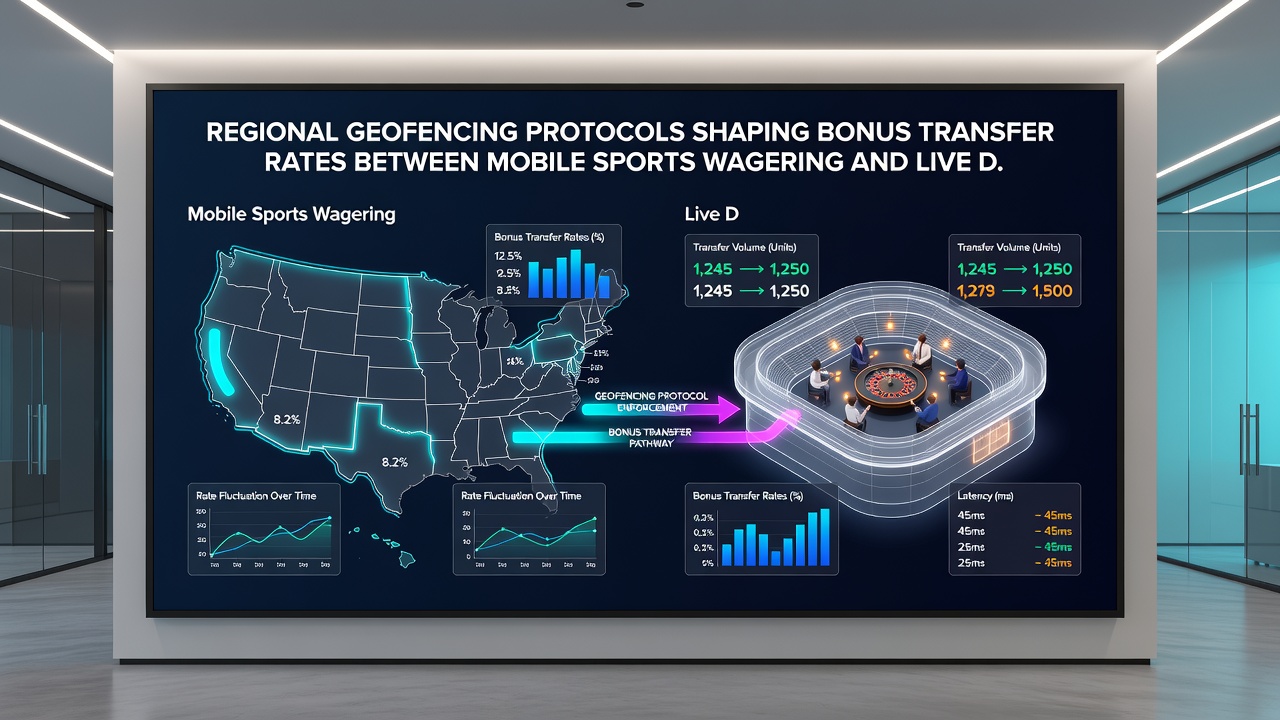
Regulatory Variations and Data Patterns
Regulatory bodies in different regions publish quarterly reports that track these transfer metrics, and the numbers reveal clear differences tied to how strictly each jurisdiction audits geofence accuracy. According to figures released by the Michigan Gaming Control Board, bonus transfers from sports to live dealer products succeeded in 91 percent of audited cases during the first half of 2026 when both activities occurred inside the same state borders. In contrast, transfers that crossed into a neighboring state with stricter contribution caps succeeded only 74 percent of the time, prompting operators to display real-time warnings before the transaction completes. A separate analysis from the Canadian Gaming Association highlighted similar patterns in provinces that share borders with U.S. markets offering comparable mobile products, where cross-border geofence handoffs required additional verification steps that extended session times by an average of 28 seconds.
Operational Adjustments by Operators
Operators respond to these protocol differences by maintaining separate bonus pools tagged to each state's geofence map, and they adjust transfer multipliers automatically when the system detects a change in regulatory zone. Players who frequently move between states often see their available bonus balance displayed with conditional values that update once the next location check completes, which prevents attempts to exploit more favorable rates in adjacent markets. Industry reports show that companies using unified geofencing platforms across multiple states reduced compliance-related bonus reversals by 31 percent between 2025 and October 2026, while those relying on patchwork solutions continued to experience higher reversal volumes during major sporting events that drive increased table game traffic.
Conclusion
Regional geofencing protocols continue to define the practical limits of bonus movement between mobile sports wagering and live dealer table games, with transfer rates reflecting the alignment or divergence of rules across neighboring jurisdictions. As states refine their location verification requirements and operators update their systems accordingly, the data patterns emerging from 2026 indicate that synchronized protocols produce higher completion percentages while mismatched rules introduce automatic adjustments and delays that players encounter in real time. These mechanisms remain central to maintaining compliance across multi-state markets where both product categories operate side by side on the same mobile platforms.