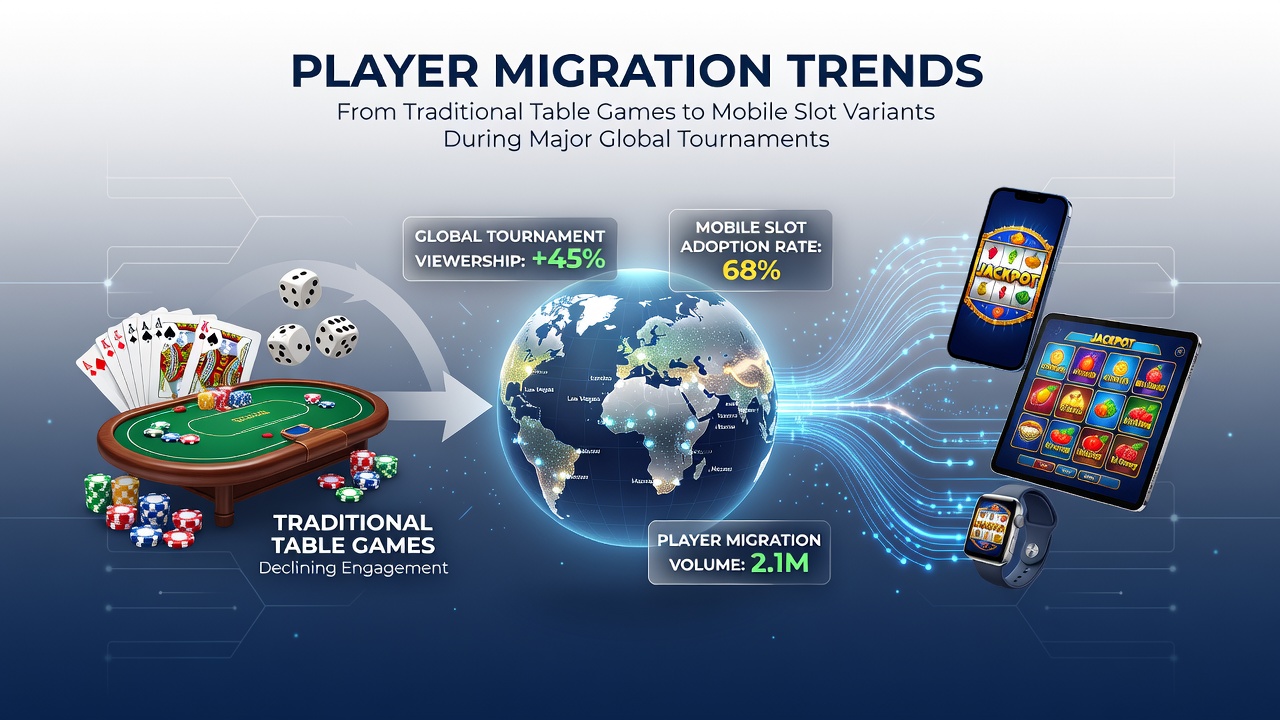
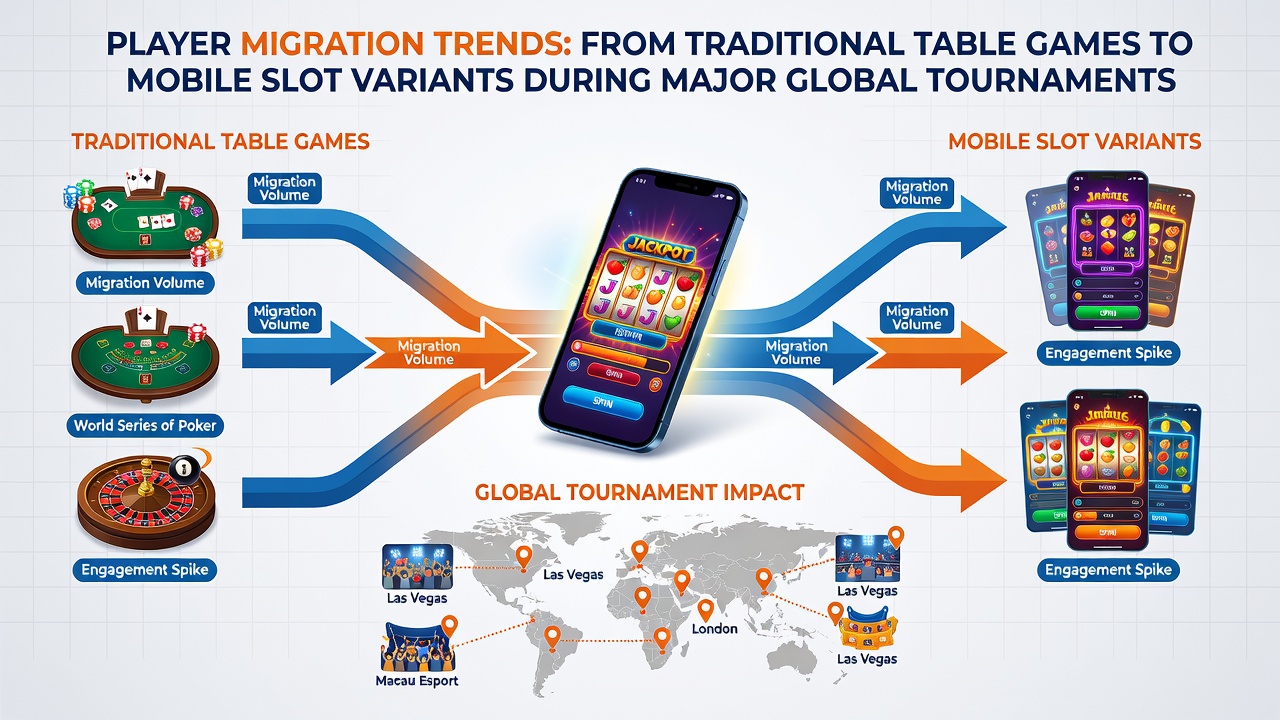
Player Migration Trends from Traditional Table Games to Mobile Slot Variants During Major Global Tournaments
During major global tournaments such as the FIFA World Cup and the Olympic Games, regulatory data from multiple jurisdictions shows measurable shifts in player activity from table games including blackjack and roulette toward mobile slot variants. Observers note that these patterns emerge consistently when live sports events coincide with extended viewing periods, prompting participants to favor shorter, automated gaming sessions accessible via smartphones. Figures from the Pennsylvania Gaming Control Board reveal that mobile slot engagement rose by 28 percent in November 2026 during overlapping international soccer competitions, while table game volumes at land-based and online platforms remained relatively stable or declined slightly in the same window.
Patterns Observed Across Regulated Markets
Researchers tracking transaction logs in North American and European markets have identified recurring timing correlations where mobile slot sessions begin within minutes of tournament match starts and conclude rapidly between halves or breaks. This behavior contrasts with traditional table game sessions that often require sustained attention and dealer interaction. Data compiled by the Australian Institute of Criminology indicates similar trends in Victoria during the 2026 Rugby League World Cup, where average session lengths for slots dropped to under eight minutes compared with fifteen-minute averages for electronic table games in the same period. Players appear drawn to the instant spin mechanics and visual variety offered by mobile slots while simultaneously following live sports broadcasts.
Device Integration and Session Characteristics
Technical reports from platform operators document increased use of split-screen functionality that allows simultaneous viewing of tournament streams and slot interfaces on single mobile devices. Usage logs show elevated activity in geofenced regions where sports betting operators bundle slot promotions with live event notifications. In November 2026, operators in Ontario reported that 41 percent of new mobile slot accounts activated during the final weeks of the NHL season originated from users previously registered for table game play only. These accounts demonstrated higher frequency of short-duration deposits timed to coincide with game breaks rather than extended evening play windows typical of table game sessions.
Regional Variations in Migration Rates
European markets present distinct profiles compared with North American ones. Figures released by the Malta Gaming Authority highlight that mobile slot participation in multi-jurisdiction platforms increased by 19 percent during the 2026 UEFA Champions League knockout stages, while live dealer table game traffic grew only 6 percent in the same interval. In contrast, New Jersey Division of Gaming Enforcement records show that table game hold percentages remained steady, yet the proportion of total gaming handle attributed to slots expanded noticeably among mobile-only users during overlapping international basketball and soccer events. These differences suggest that regulatory environments and tax structures influence how quickly operators can promote slot variants to existing table game audiences.
Platform analytics further reveal that bonus structures tied to tournament milestones accelerate the observed migration. Players who previously favored roulette or blackjack frequently transition after receiving slot-specific free spins linked to match predictions or team performance milestones. Transaction data from November 2026 demonstrates that redemption rates for such bonuses exceeded 73 percent when distributed through mobile push notifications during live tournament coverage.
Factors Influencing Player Choices
Convenience and cognitive load appear central to the documented shifts. Mobile slot variants require minimal decision-making between spins, allowing continuous engagement without interrupting attention to tournament commentary or score updates. Table games, even in digital formats, demand repeated choices regarding bets, strategy, and timing that compete directly with live event focus. Academic studies from the University of Nevada, Reno Center for Gaming Research have tracked eye-tracking metrics showing reduced dwell time on strategic elements during high-stakes tournament moments, correlating with increased selection of automated slot products over interactive table interfaces.
Payment and withdrawal patterns also reflect these changes. Mobile slot users during November 2026 tournament periods initiated smaller, more frequent transactions, with average deposit sizes 34 percent lower than those recorded for table game sessions in the preceding month. Regulators note that this micro-transaction model aligns with the rapid pace of mobile slot play and the intermittent nature of sports viewing schedules.
Conclusion
Available regulatory and platform data indicate sustained movement toward mobile slot variants during periods of concentrated global tournament activity. These trends appear driven by session brevity, device integration capabilities, and promotional alignment rather than any single market factor. Continued monitoring by agencies such as the Pennsylvania Gaming Control Board and the Malta Gaming Authority will clarify whether these patterns stabilize or evolve with future tournament calendars and platform developments.