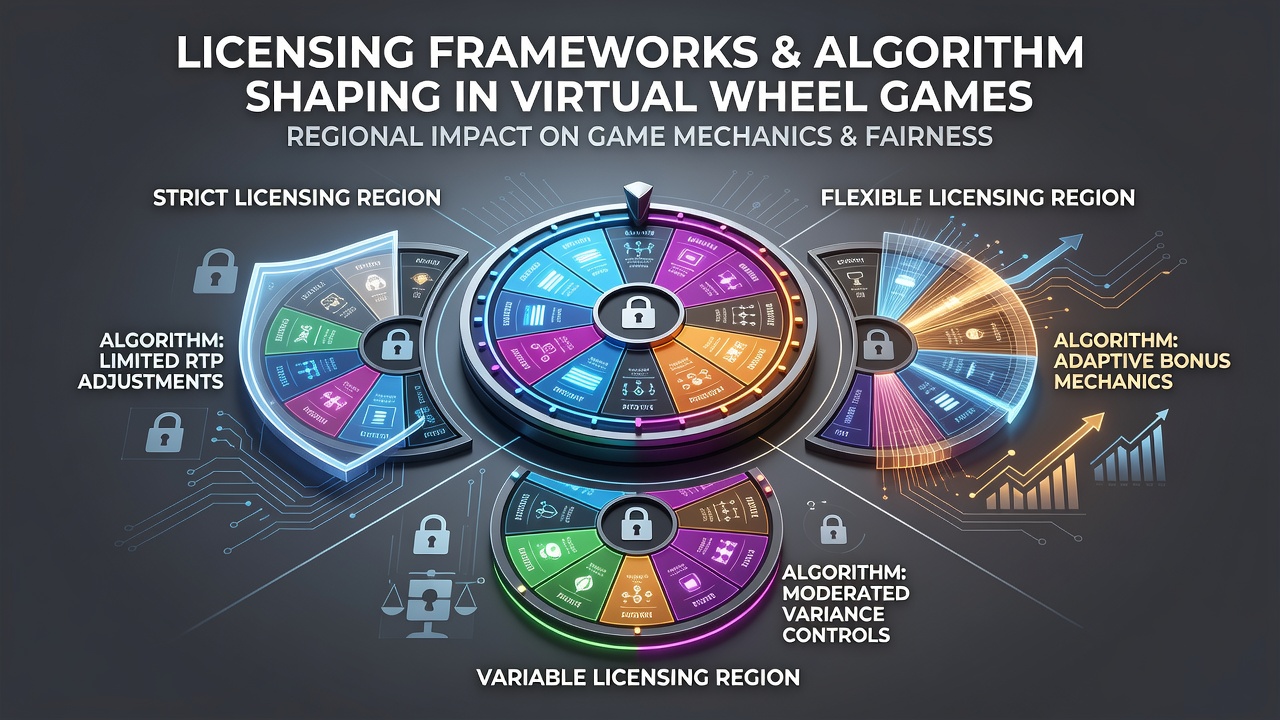
How Licensing Frameworks Influence Algorithm Adjustments in Virtual Wheel Games Across Regions
Virtual wheel games operate under strict regulatory oversight that directly determines how developers calibrate random number generators and return-to-player percentages, with each jurisdiction imposing distinct technical requirements that force ongoing algorithm modifications. Licensing bodies in North America, Europe, and Asia Pacific maintain separate certification processes, and these differences lead operators to deploy region-specific versions of the same game titles. Data from industry compliance reports shows that algorithm parameters such as hit frequency and volatility ranges undergo documented revisions whenever operators expand into new markets.
North American Regulatory Requirements
State and provincial regulators in the United States and Canada require independent testing laboratories to verify that virtual wheel algorithms meet predefined statistical thresholds before any game receives approval for deployment. Nevada Gaming Control Board standards, for example, mandate that wheel outcomes demonstrate uniform distribution across millions of simulated spins, prompting developers to recalibrate seed values and mapping tables during each submission cycle. Ontario's iGaming framework adds further constraints by requiring real-time monitoring interfaces that allow regulators to audit live adjustment logs, which in turn compels providers to embed version-controlled modules that prevent unauthorized changes after certification.
Operators active across multiple North American jurisdictions maintain separate code branches for each license, since a single algorithm configuration rarely satisfies every set of technical specifications. Figures released by the American Gaming Association indicate that more than sixty percent of virtual wheel titles undergo at least one parameter adjustment between initial certification and commercial launch when expanding from one state to another.
European and Asia-Pacific Variations
European licensing authorities apply a broader set of technical standards that emphasize both fairness and consumer protection metrics, leading to algorithm modifications focused on session-duration limits and loss-limit integration. Malta's regulatory framework, administered through the Malta Gaming Authority, requires that virtual wheel games incorporate adjustable maximum stake caps tied directly to the certified random number generator output, which forces developers to redesign payout tables whenever stake parameters change. Australian state regulators impose additional layers of testing for games offered to residents, including mandatory disclosure of theoretical return percentages that must remain fixed once certification is granted.

Research published by the University of Sydney's Gambling Research Unit demonstrates that Australian-licensed virtual wheel products exhibit narrower volatility bands than their European counterparts, a direct consequence of licensing conditions that prioritize extended play sessions over high-variance outcomes. In Singapore and Malaysia, licensing conditions further restrict the frequency of bonus feature triggers, requiring developers to modify weighting algorithms so that promotional events align with local cultural expectations and responsible gaming guidelines.
September 2026 Regulatory Updates
Beginning in September 2026, several Canadian provinces plan to align their technical standards with emerging ISO guidelines for random number generator testing, an initiative that will necessitate widespread algorithm recalibration across existing virtual wheel libraries. Compliance teams have already begun mapping current configurations against the forthcoming requirements, with preliminary assessments indicating that approximately forty percent of certified titles will require revised seed-mapping procedures to maintain approval. Operators report that these upcoming changes will standardize certain statistical reporting formats while still preserving jurisdiction-specific limits on maximum payout multipliers.
Implementation Practices Across Markets
Developers respond to these divergent frameworks by maintaining centralized algorithm cores surrounded by jurisdiction-specific configuration layers, allowing rapid adaptation without full recertification in every market. This modular approach reduces the time required to adjust parameters such as reel weighting or wheel segment probabilities when entering a new licensing region. Industry reports from the European Gaming and Betting Association show that average certification timelines have shortened by eighteen percent over the past three years as providers refine these layered architectures.
Testing laboratories play a central role in validating each adjustment, and their documented findings determine whether an operator can launch a modified version or must submit an entirely new certification package. Observers note that jurisdictions with mutual recognition agreements, such as those between certain Australian states and New Zealand, experience faster rollout cycles because algorithm changes approved in one location receive expedited review elsewhere.
Conclusion
Licensing frameworks establish the technical boundaries within which virtual wheel algorithms must operate, producing measurable differences in game behavior across regions. Continued alignment efforts, including the September 2026 Canadian updates, will further standardize certain testing procedures while leaving core regional distinctions intact. Operators and developers therefore continue to invest in flexible certification pipelines that accommodate these evolving requirements without compromising statistical integrity.